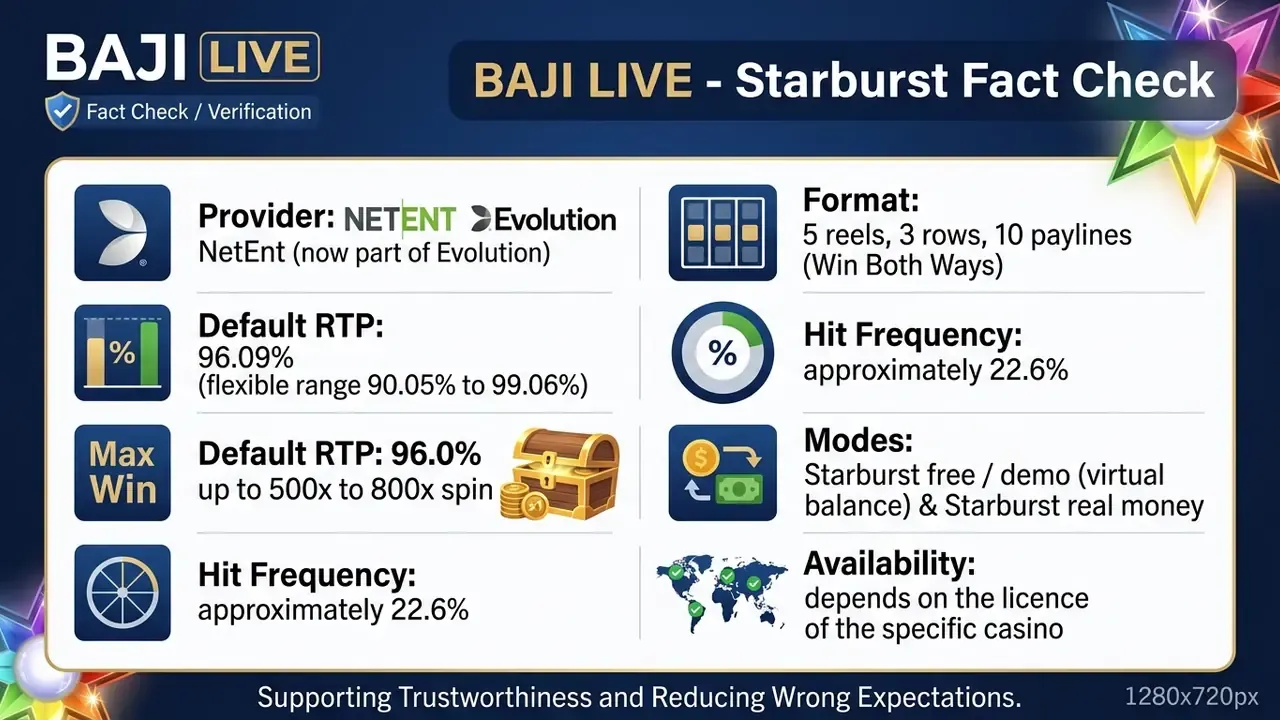
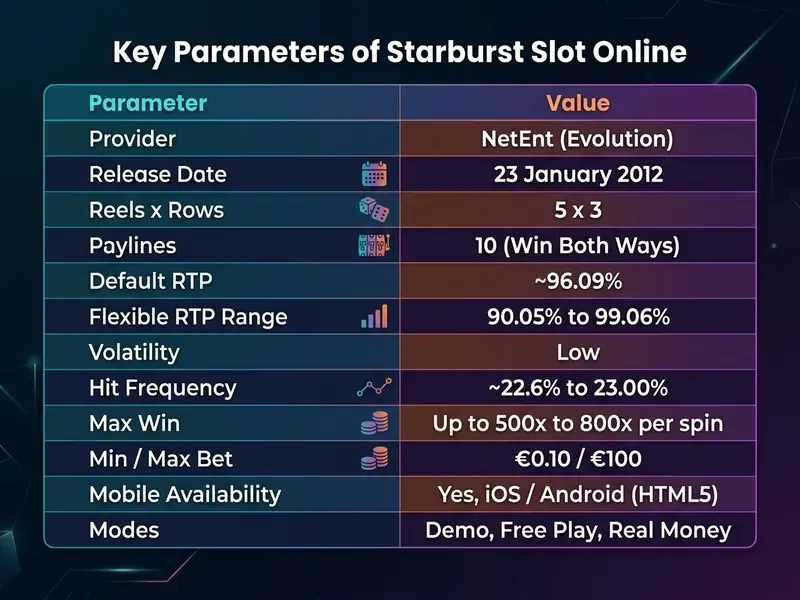
RTP represents the theoretical return over millions of spins, while volatility determines the rhythm of those payouts. A value of 96.09% does not guarantee that you will get back 96 cents on every dollar during a short session. It is a long-run statistical average. In practice, individual sessions can swing wildly in either direction.
Here is something counterintuitive. Research involving 6,062 participants found that a standard message about 90% RTP paradoxically increased players' perceived chances of winning compared with receiving no RTP information at all. The odds ratio exceeded 5. - Experimental study on RTP communication, 6,062 participants, UK and US. Published 2025.
Low variance generates constant small outcomes. A longitudinal panel regression of approximately 2,600 UK online-slot players showed that shifting towards high-volatility games accelerates deposit loss and shortens sessions, but does not necessarily increase cumulative harm. Low-volatility Starburst therefore provides a longer, though still house-edge-governed, playing process. - Playtech, longitudinal online-slot study, ~2,600 UK players, 2024.
With a hit frequency of roughly 22.6%, Starburst delivers slightly more than one paying result in every five spins on average. This is part of what makes the game feel "active," even when net returns are negative over time.