
"Over the years we have analysed dozens of approaches to educational content. The main conclusion: blackjack demands strict mathematical discipline, not blind trust in intuition. Before placing a real stake, study the core mechanics, use demo mode, and keep local regulatory restrictions in mind. Responsible play means controlling risk and understanding the rules transparently." - Nadia Farzana Haque, Editor-in-Chief, iGaming Bangladesh.
Table of Content
- What is blackjack and how the game works
- Blackjack rules every player should know
- How to play blackjack online: demo, real money and live formats
- Blackjack strategy for beginners
- Blackjack variants you can find online
- How to choose a blackjack casino or live casino table
- Glossary of key blackjack terms
- Online blackjack and Bangladesh: legal context and practical risks
- FAQ about blackjack online
Blackjack online: rules, strategy, demo and real money play
RTP
99.46%
Key takeaways before you read:
- Blackjack is a player-versus-dealer card game where skill measurably reduces the house edge over the long run.
- Basic strategy, a mathematically derived decision table, can bring the casino advantage down to roughly 0.5 % under favourable rules (3:2 payout, S17, 6-8 decks).
- Always start with free demo play. Transition to real money only after you can follow the strategy chart without hesitation.
- Card counting does not work in online RNG blackjack and is severely limited at live tables that use 8-deck shoes with roughly 50 % penetration.
Disclaimer: This article is for informational purposes only and does not constitute financial or legal advice. Online gambling is regulated by the laws of your jurisdiction. Verify the legality of participation before depositing real funds. If you or someone you know shows signs of problem gambling, please seek help from a licensed professional.
What is blackjack and how the game works
Blackjack is a card game played against the dealer. The participant aims to assemble a hand as close to 21 points as possible without going over that limit. Within the iGaming industry it is one of the few disciplines where player skill has a measurable impact on outcomes. That skill-based element is exactly what separates blackjack from, say, slots or roulette.
To get started, a user needs to understand one fundamental truth: you play exclusively against the mathematical algorithm or the casino's representative, not against other players at the table.
"Blackjack demands strict mathematical discipline, not blind trust in intuition." - Nadia Farzana Haque, Editor-in-Chief, iGaming Bangladesh.
A common mistake among newcomers arriving from multiplayer card formats is treating blackjack as a competition among several participants. In reality, the only opposing force is the dealer. Once you internalise this, you begin to evaluate the dealer's visible upcard objectively. You stop making illogical bets influenced by what other players do at the same table. That shift in perspective is, honestly, the single biggest leap a beginner can make.
The goal of the hand and why 21 matters
The primary goal of every round is to beat the dealer by collecting a point total closer to 21 than the dealer's total, without busting (going over 21). Formal game-theoretic models confirm that 21 defines the strategic balance between the desire to draw an additional card (hit) and the risk of an instant loss.
"Blackjack is a stochastic adversarial game with incomplete information, where reaching 21 is a mathematical compromise of marginal utility." - A Formal Game-Theoretic Model of Blackjack, SSRN, 2023. https://ssrn.com/abstract=blackjack-game-theoretic
Put more simply: 21 is the ceiling that makes every decision meaningful. If a player exceeds the limit, the stake is lost immediately, even if the dealer would also have busted later in the same round. That asymmetry is what gives the house its built-in edge.
Round outcomes at a glance:
- Win:Your final total is higher than the dealer's without exceeding 21, or the dealer busts while you do not.
- Loss (bust):Your total exceeds 21 before or after the dealer acts, or the dealer finishes with a higher valid total.
- Push (tie):Both you and the dealer finish with the same total. Your wager is returned.
How a round starts with two cards
A standard round always begins by dealing two cards to the player (face-up) and two cards to the dealer (one face-up, called the upcard, and one face-down, called the hole card). This starting phase creates the first zone of incomplete information on which all subsequent decisions are based. Before the player takes any action, the system or live croupier checks for a natural blackjack (an Ace plus a 10-value card).
Worth noting: the moment you see your two cards and the dealer's upcard, you already have enough information to make a mathematically grounded decision. That is the beauty of the game's structure.
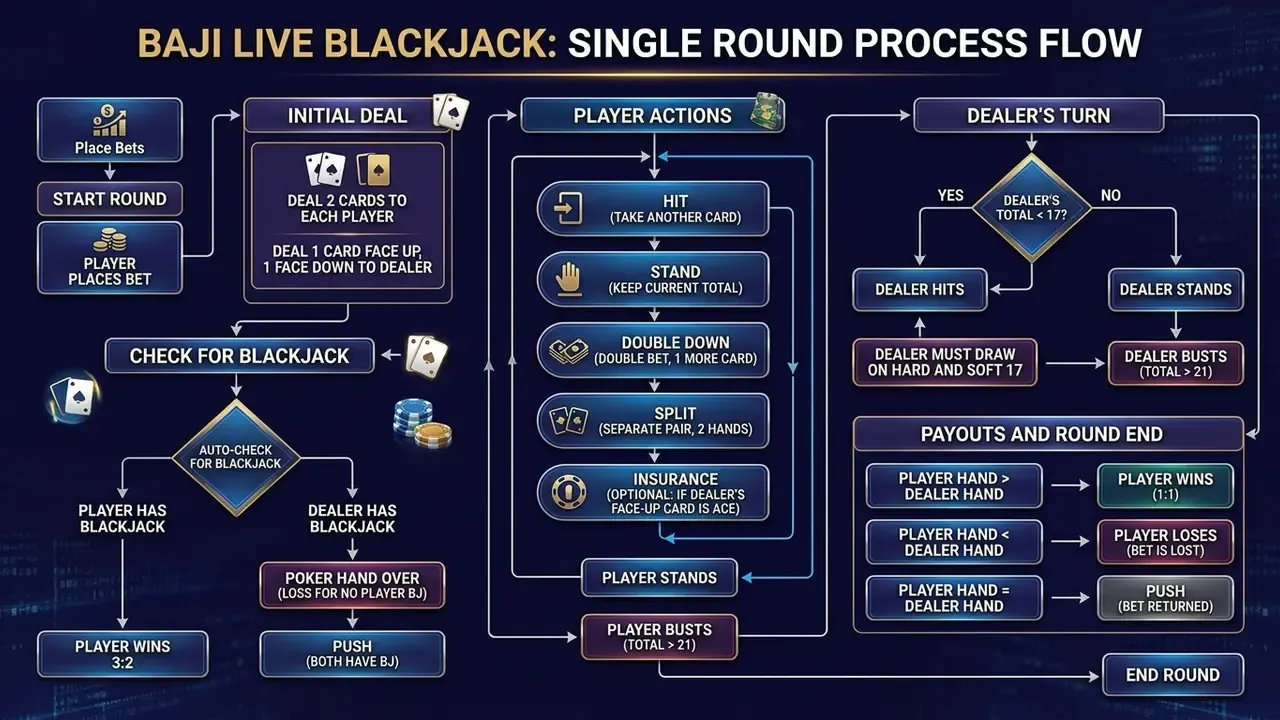
- Description:Round flow: receive two cards → check for natural blackjack → player chooses action (Hit / Stand / Double Down / Split / Surrender) → dealer's turn → outcome and payout. In the DOM a step-by-step textual list. Image with alt="blackjack game round flowchart".
- Purpose:Helps a newcomer quickly understand the mechanics and lowers the barrier before they decide to play blackjack.
- Markup:
<figure>and<figcaption>;<ul>in a hidden text description for accessibility.
Blackjack rules every player should know
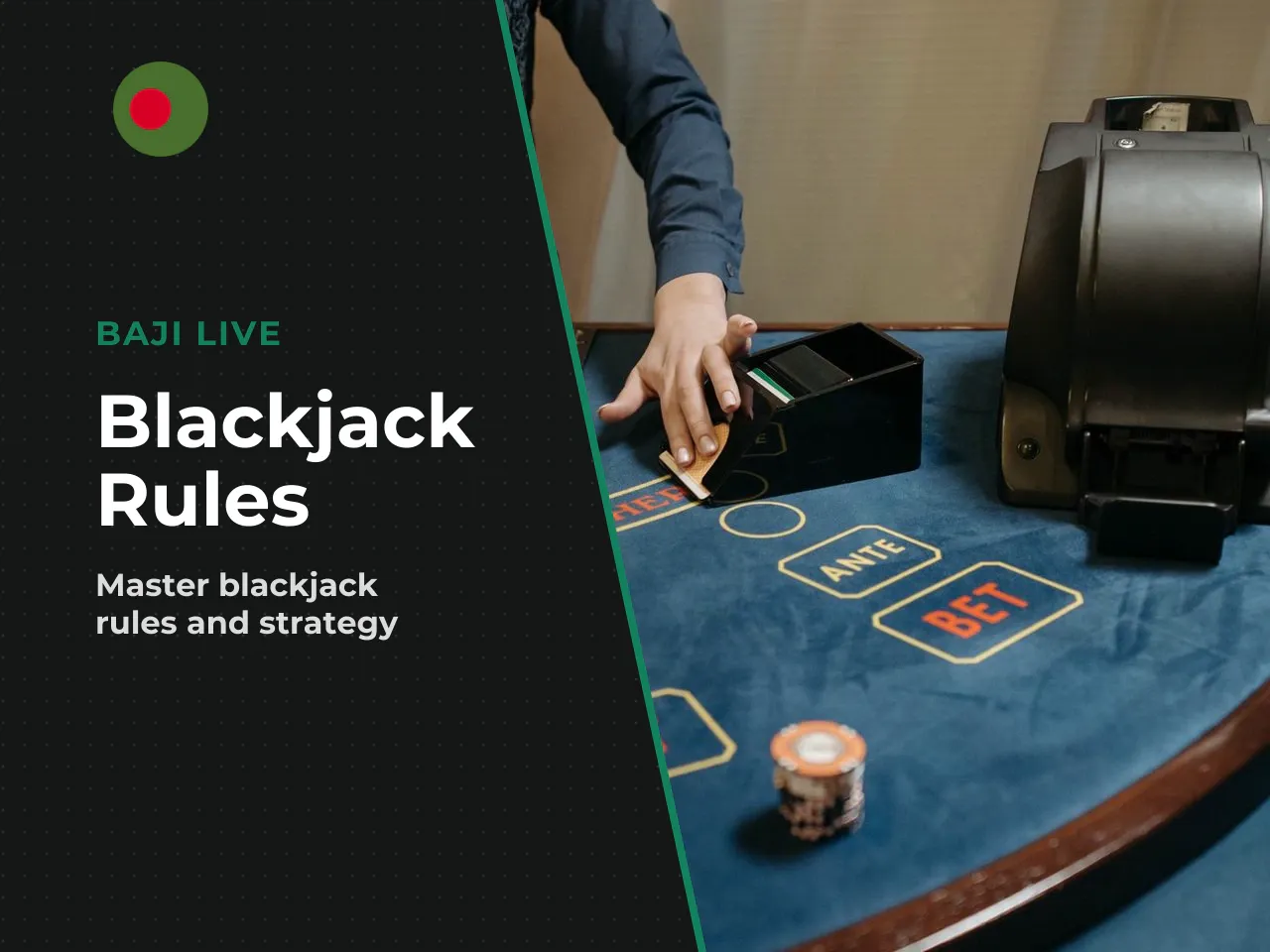
Core blackjack rules define card values, the order of actions, and constraints on the casino. Here is the key concept: the player has freedom of choice, whereas the dealer's algorithm is rigidly governed by the provider's internal instructions (for example, always draw to 17). Knowing these rules lets you minimise the house edge and play consciously rather than reactively.
Card values, ace and hand totals
Cards from 2 to 10 are scored at face value. Face cards (Jack, Queen, King) are worth exactly 10 points each. The Ace possesses a unique dual value: it can count as either 1 or 11 depending on which is more favourable for the current hand without causing a bust.
- Example: King + 7 = 17 (hard hand). Ace + 6 = soft 17 (the Ace counts as 11; if you hit and draw a 10, the Ace reverts to 1 and your total becomes 17 again rather than 27).
A hand containing an Ace counted as 11 is called a "soft" hand because its total can shift downward if a further card is drawn. A hand without an Ace, or where the Ace is forced to count as 1, is "hard." Proper evaluation of this Ace flexibility is the foundation of every sound blackjack strategy, because it dictates whether hitting carries a real risk of busting. Miss this distinction, and you will consistently make the wrong call on soft hands.
Hit, stand, double down, and the dealer's turn
The player's primary decisions are to request another card (hit) or to refuse one (stand). However, two additional actions are equally important for beginners to understand:
- Double Down: You double your original bet and receive exactly one more card. No further hits are allowed. The optimal time to double down is when you hold a hard 10 or 11 and the dealer shows a weak upcard (2 through 6), because the probability of landing on a strong total is highest.
- Surrender (where available): You forfeit half your bet and end the hand immediately. This option is mathematically correct in narrow situations, such as holding a hard 16 against the dealer's 9, 10, or Ace. Not every table offers surrender, so always check the rules before sitting down.
Once the player completes all actions, the dealer's turn begins. Under standard rules, the dealer always draws until reaching a total of 17 or higher.
The difference between tables often lies in the treatment of soft 17. In S17 rules the dealer must stand on any 17, whereas H17 forces the dealer to hit a soft 17. Understanding this nuance protects your bankroll: H17 slightly increases the house edge, so S17 tables are preferable when you have the choice.
What is a Push? If you and the dealer end with the same total, the result is a push (tie). Your original bet is returned. No money is won or lost.
Insurance and side bets in blackjack
Additional (side) bets, including insurance, are mathematically unfavourable decisions for players who do not count cards. Insurance is offered when the dealer's upcard is an Ace. It pays 2:1, but the probability that the hidden card is worth 10 points, giving the dealer a natural blackjack, does not justify the cost of the bet under standard multi-deck conditions.
Insurance is a negative-expectation wager for players without a card count in standard 6-8 deck games, with a house edge that can reach approximately 7.4 % in 6-8 deck shoes. On popular side bets such as Perfect Pairs or 21+3, the casino edge ranges from roughly 2 % to 11 % depending on the paytable and deck count.
A quick clarification: the roughly 7.4 % figure applies specifically to games with 6-8 decks. In a single-deck game the insurance house edge drops to about 5.9 %. Always check the number of decks at your table before even considering this bet.
How to play blackjack online: demo, real money and live formats
Disclaimer: Online gambling is regulated by the laws of your jurisdiction. Verify legality before depositing real funds. This information is general in nature and does not replace professional advice.
Modern iGaming offers three access formats: free demo versions with no risk, real-money random-number-generator games (RNG), and tables with live video streaming (live dealer). Your choice of format should be dictated by your preparation level. Switching to real money fundamentally changes the psychology of decision-making, and that shift catches more people off guard than you might expect.
Blackjack demo and free play for practice
"We strongly recommend treating demo mode as a safe sandbox. Integrating responsible-gaming concepts starts precisely with understanding that test-mode successes do not guarantee profits when real stakes are involved." - Nadia Farzana Haque.
The blackjack demo format uses an exclusively virtual balance, eliminating any financial risk for the user. Demo access is an essential stage that allows you to test the online casino interface, learn card values, and practise basic strategy without stress. The mathematical model behind a demo game is identical to the real-money RNG version. Only the currency is fictitious.
Research on responsible-gambling messaging adds another dimension: players respond better to self-appraisal prompts than to purely informational warnings, and such messages are more effective at reducing play intensity.
"Players prefer self-appraisal messages over informational ones, and it is precisely self-appraisal prompts that more effectively reduce gambling intensity." - Evaluating the Effectiveness of Responsible Gambling Messages, Journal of Gambling Studies, 2025. https://link.springer.com/article/10.1007/s10899-025-rg-messages
Practical tip: While playing in demo mode, ask yourself periodically: "Am I following the strategy chart, or am I guessing?" This self-check habit transfers directly to real-money sessions and builds the kind of discipline that no tutorial can replace.
Real money blackjack and what changes
Disclaimer: This section describes financial risks associated with real-money wagering. This information is general and does not replace professional advice.
The transition to blackjack real money radically changes the emotional landscape. When genuine currency enters the process, the fear of losing money arises, leading to irrational behaviours. Refusing to hit because of bust anxiety. Spontaneously increasing bet sizes after a loss (chasing losses). In this format, blackjack casino operators are required to provide limit-setting tools: deposit limits, loss limits, session timers. The mathematics of classic blackjack remains strictly unchanged; only the player's perception of risk shifts.
"Responsible-gaming policy has a small but statistically significant indirect negative effect on casino gambling behaviour." - Effect of Responsible Gaming Policy and Practice on Casino Gaming Behavior, Journal of Gambling Studies, 2024. https://link.springer.com/article/10.1007/s10899-024-rg-policy
This finding means that operator-side tools, such as deposit caps, reality checks, and cool-off periods, do measurably slow high-risk behaviour, even if the effect is modest. Use every tool your casino offers. Seriously, every single one.
Blackjack live dealer and live casino tables
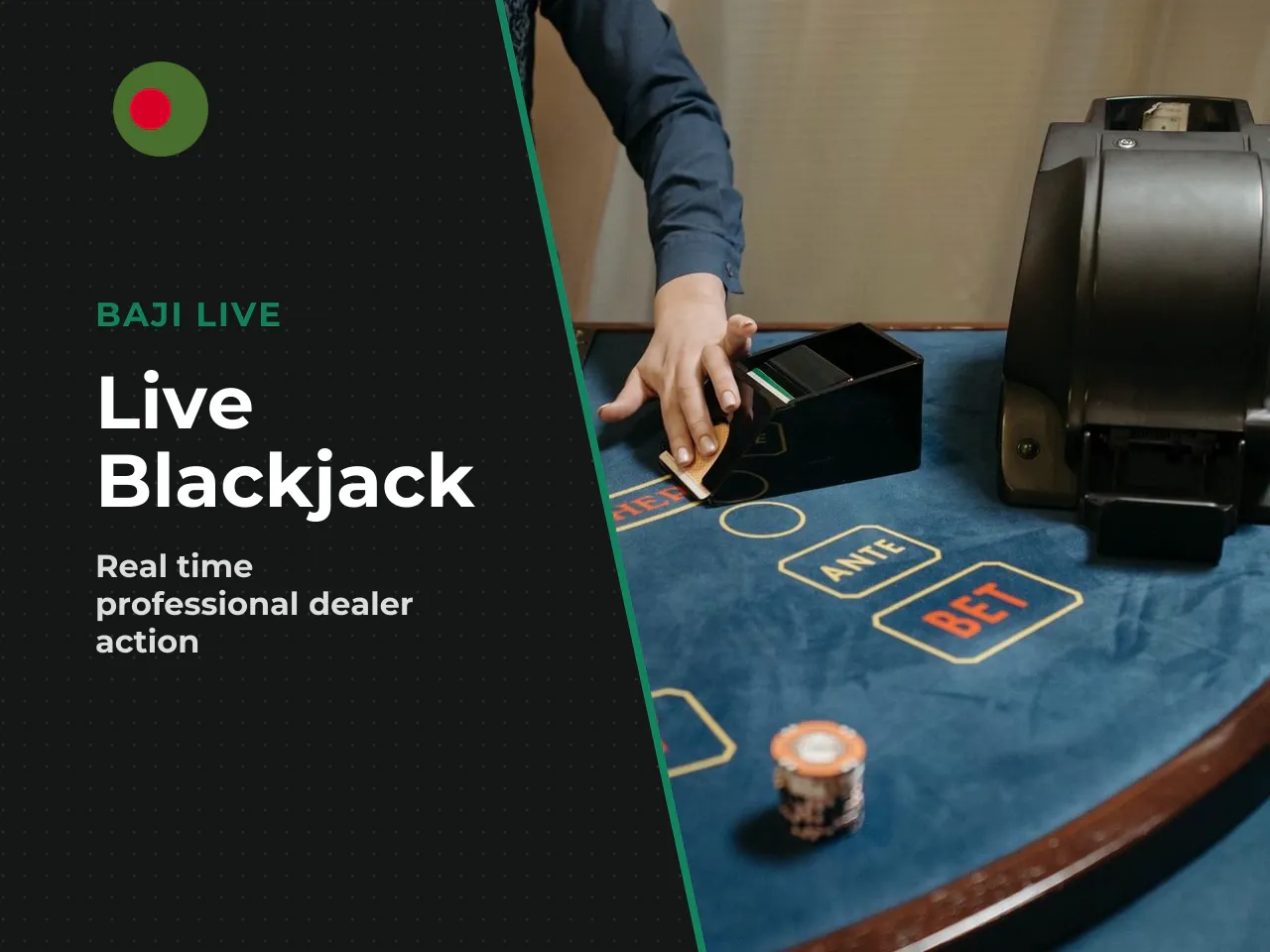
Live dealer blackjack combines a digital interface with a physical deck and a human presenter streamed from a secured studio. Cards are read by OCR (optical character recognition) technology and transmitted to the player's screen in fractions of a second. Research highlights a behavioural risk: live formats are associated with higher rates of risky behaviour because the pace is dictated by the dealer, and the social element can stimulate within-session top-ups (additional deposits during a session).
"Within-session top-ups are most strongly associated with live versions of blackjack and roulette among all online gambling products." - Behavioural Markers of Harm and Their Potential in Identifying Product Risk in Online Gambling, International Journal of Mental Health and Addiction, 2023. https://link.springer.com/article/10.1007/s11469-023-blackjack-markers
Furthermore, breaks in play, often enforced by blackjack live casino platforms, achieve their intended effect only when accompanied by self-appraisal warning messages.
"Breaks in play achieve the intended effect only when accompanied by warning messages and personal self-assessment." - Breaks in Play: Do They Achieve Intended Aims?, Journal of Gambling Studies, 2023. https://link.springer.com/article/10.1007/s10899-023-breaks-in-play
Comparative format specifications:
| Format | Financial Risk | Pace of Play | Dealer Interaction | Avg. RTP (ideal strategy) |
|---|---|---|---|---|
| Demo (RNG) | Zero, virtual chips only | Flexible, set by the player | Virtual dealer, no chat | N/A (no real payout) |
| Real money (RNG) | Depends on table limits ($1-$5 000+) | Moderate, user-controlled | Virtual dealer | ~99.5 % |
| Live Dealer | High (real bankroll at stake) | Fast, synchronised with physical table | Live interaction, OCR tracking | ~99.5 % |
We recommend that all users start exclusively with demo versions. There is no rush.
Blackjack strategy for beginners
Basic strategy is a set of pre-calculated mathematical rules. Under favourable table conditions (3:2 natural blackjack payout, S17, 6-8 decks), perfect adherence can reduce the house edge to approximately 0.5 %. Without it, playing blackjack becomes something closer to a random lottery with steep losses. Research in dynamic programming confirms that deviating from the optimal decision table yields no long-term advantage.
"Following basic strategy is nearly as effective as ideal probabilistic calculations based on the exact composition of the remaining deck." - Optimal Blackjack Betting Strategies Through Dynamic Programming and Expected Utility Theory, arXiv, 2025. https://arxiv.org/abs/2025-blackjack-dp
A note on that 0.5 % figure: it depends on specific rule sets (number of decks, S17 vs H17, doubling and splitting rules). The arXiv 2025 paper confirms that basic strategy approaches the theoretical optimum. The 0.5 % benchmark is widely cited in gambling-mathematics literature for standard 6-deck S17 games.
Basic strategy and common first decisions
Starting actions depend directly on your hand and the dealer's upcard. An optimised basic strategy dictates strict axioms. Here are concrete examples you can apply at the table right away:
- Hard 11:Always double down if the dealer shows 2 through 10. Your odds of landing on 21 or a strong total are at their peak.
- Pair of Aces:Always split. A single Ace gives you a starting value of 11, an excellent launching point for each new hand. Two Aces together total only 12, a weak position.
- Pair of 8s:Always split. Sixteen is the worst total in blackjack; splitting gives you two chances to build on 8.
- Pair of 9s:Stand if the dealer shows a 7. The dealer likely holds 17, so your 18 wins. Split against 2-6, 8, or 9.
- Soft 16 (Ace + 5):Always hit, or double down against the dealer's weak upcards (4, 5, 6). The Ace protects you from busting.
- Soft 13 to Soft 16:Hit against all dealer upcards. Your hand is too weak to stand, but the Ace cushions the risk.
- Soft 17 to Soft 18:Stand if the dealer shows 3 through 6 (weak); otherwise hit.
- Hard 12 against dealer's 2 or 3:Hit. Many beginners stand here out of bust fear, but the math favours drawing.
- Never split 10s or 5s.A pair of 10s is 20, already a near-certain winner. A pair of 5s is a hard 10, ideal for doubling down.
By the data of Optimal Blackjack Betting Strategies Through Dynamic Programming (arXiv, 2025), following these rules nearly matches ideal probabilistic calculations based on the exact remaining-deck composition. Using the strategy chart helps beginners make their first decisions coolly and confidently.
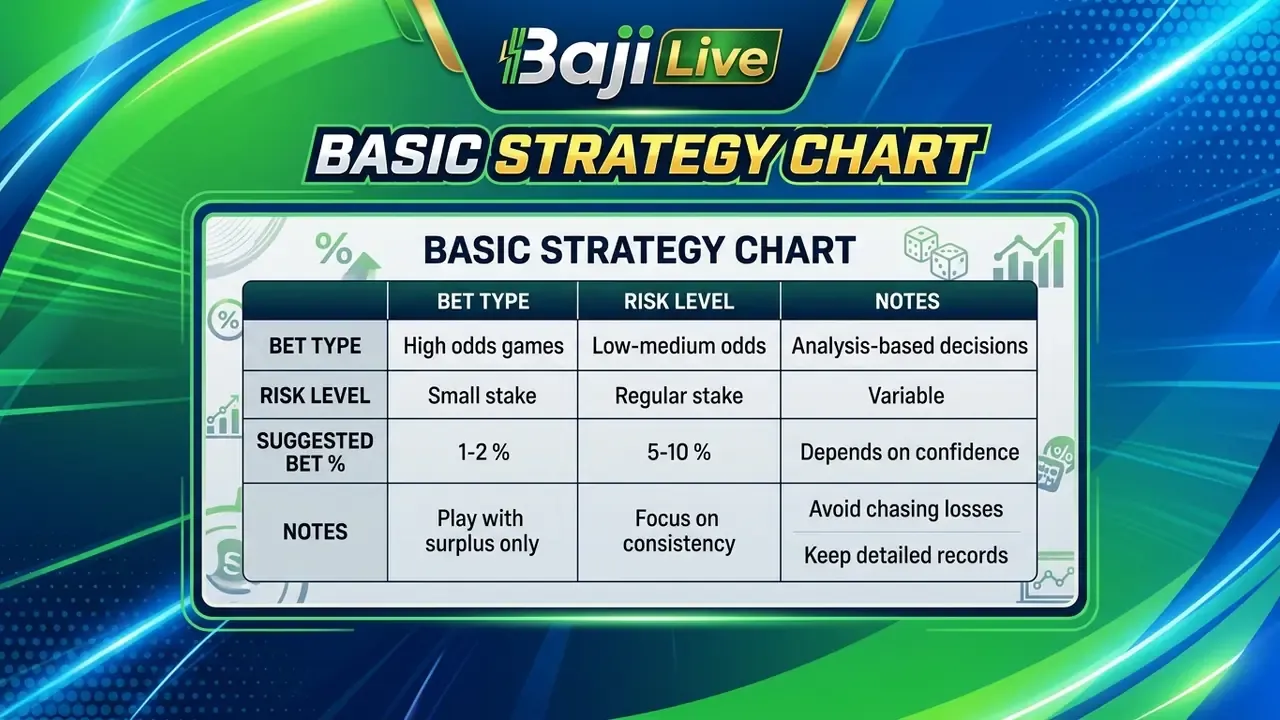
- Description: Visual cheat-sheet grid: player hand (rows) vs dealer upcard (columns). Each cell shows Hit, Stand, Double, Split, or Surrender. Image with alt="basic strategy chart for blackjack".
- Purpose: Gives the reader an actionable reference they can bookmark or print.
Mistakes that make playing blackjack weaker
Emotional instability destroys your win-rate far faster than variance. Here are the most common errors, and honestly, nearly every player has made at least one of these:
- Playing by intuition instead of following the chart. Every deviation increases the house edge.
- Chasing losses after a losing streak by raising bets impulsively. This is perhaps the single most destructive habit in money blackjack.
- Taking insurance without understanding the math (see the section above).
- Unjustified side bets. They carry a much higher house edge than the main game.
- Standing on soft hands out of bust fear, for example standing on soft 16 when the chart says hit.
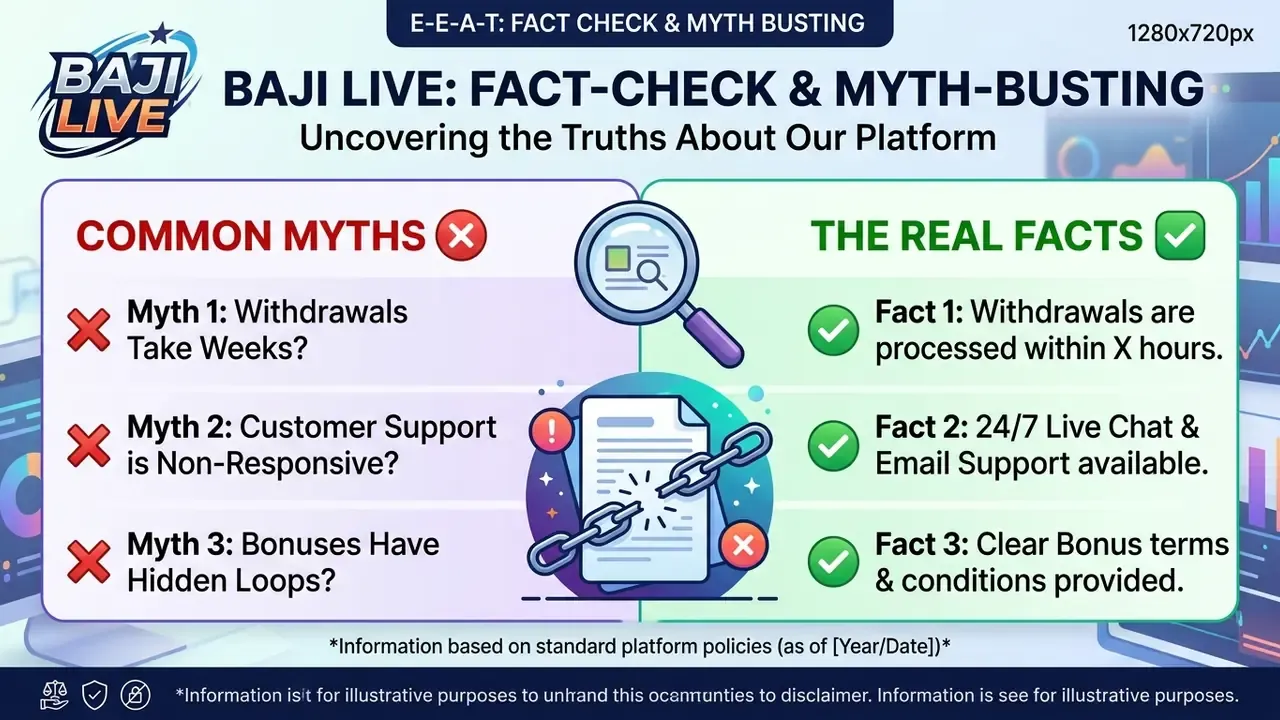
- Myth:Blackjack is pure luck.
- Fact:Q-learning algorithms in blackjack simulators show that the optimal policy converges to basic strategy given enough episodes, demonstrating a clear skill component. - Variations on the Reinforcement Learning Performance of Q-learning in Blackjack, arXiv, 2023. https://arxiv.org/abs/2023-qlearning-blackjack
- Myth:Live dealer blackjack has different rules.
- Fact:Card values and payouts remain the same. The difference lies solely in the pace, OCR technology, and the behavioural patterns it triggers in players.
- Myth:Card counting works in online blackjack.
- Fact:In RNG games the deck is virtually reshuffled before every new deal, making counting impossible. In live casino games, dealers typically use 8-deck shoes and cut them at roughly 50 % penetration, reducing any counter's mathematical edge to near zero. Focus on mastering basic strategy. It is the only reliable method for lowering the house edge online.
- Myth:Bad players at the table hurt your odds.
- Fact:In blackjack you play against the dealer only. Another player's decisions change the card order randomly. They are just as likely to help you as to harm you. Over the long run, only your own adherence to basic strategy determines your expected return.
Blackjack variants you can find online
The range of games blackjack platforms offer extends well beyond a single standard. Blackjack variants adapt classic mechanics to different audience needs, changing the interface, pace, or adding special probability events. Knowing the differences helps you pick the version that matches your experience level and risk tolerance.
Classic blackjack and digital table games
Digital RNG tables are a digitised version of classic blackjack. This variant is available in virtually any online casino. It delivers a solo experience in which the player competes one-on-one against an algorithm without timers for deliberation. Control is at its maximum, making this format the safest for practising skills and working with strategy charts. If you are still memorising the basic strategy table, this is where you should spend your time.
Live blackjack and dealer-led tables
The modern blackjack live format goes beyond a simple video stream. In provider portfolios (Evolution, for example) there are variants with random multipliers, such as Lightning Blackjack, where payouts on specific winning hands are boosted, and Infinite Blackjack, an unlimited-seat concept where a single hand is dealt to an unrestricted number of participants but each player makes individual decisions (hit, stand, double, split).
The social atmosphere of live dealer blackjack tables is genuinely different. You see the cards being dealt in real time, you can interact with the croupier through chat, and the pace feels closer to a physical casino. That said, the faster rhythm leaves less room for consulting your strategy chart, so preparation matters more here.
Popular variants worth knowing
Beyond the classic and live formats, several rule variations appear frequently across online casinos:
- Blackjack Surrender:Allows the player to fold after the initial deal, losing only half the bet. Mathematically optimal when holding 16 against the dealer's 9, 10, or Ace.
- Blackjack Switch:The player receives two hands and may swap the top cards between them. The trade-off: a natural blackjack pays only 1:1 instead of 3:2.
- Atlantic City Blackjack:Played with 8 decks, late surrender permitted, dealer stands on all 17s. A relatively player-friendly rule set.
- European Blackjack:The dealer receives only one card face-up initially (no hole card); the second card is dealt after all player actions are complete. This changes the dynamic around insurance and doubling decisions.
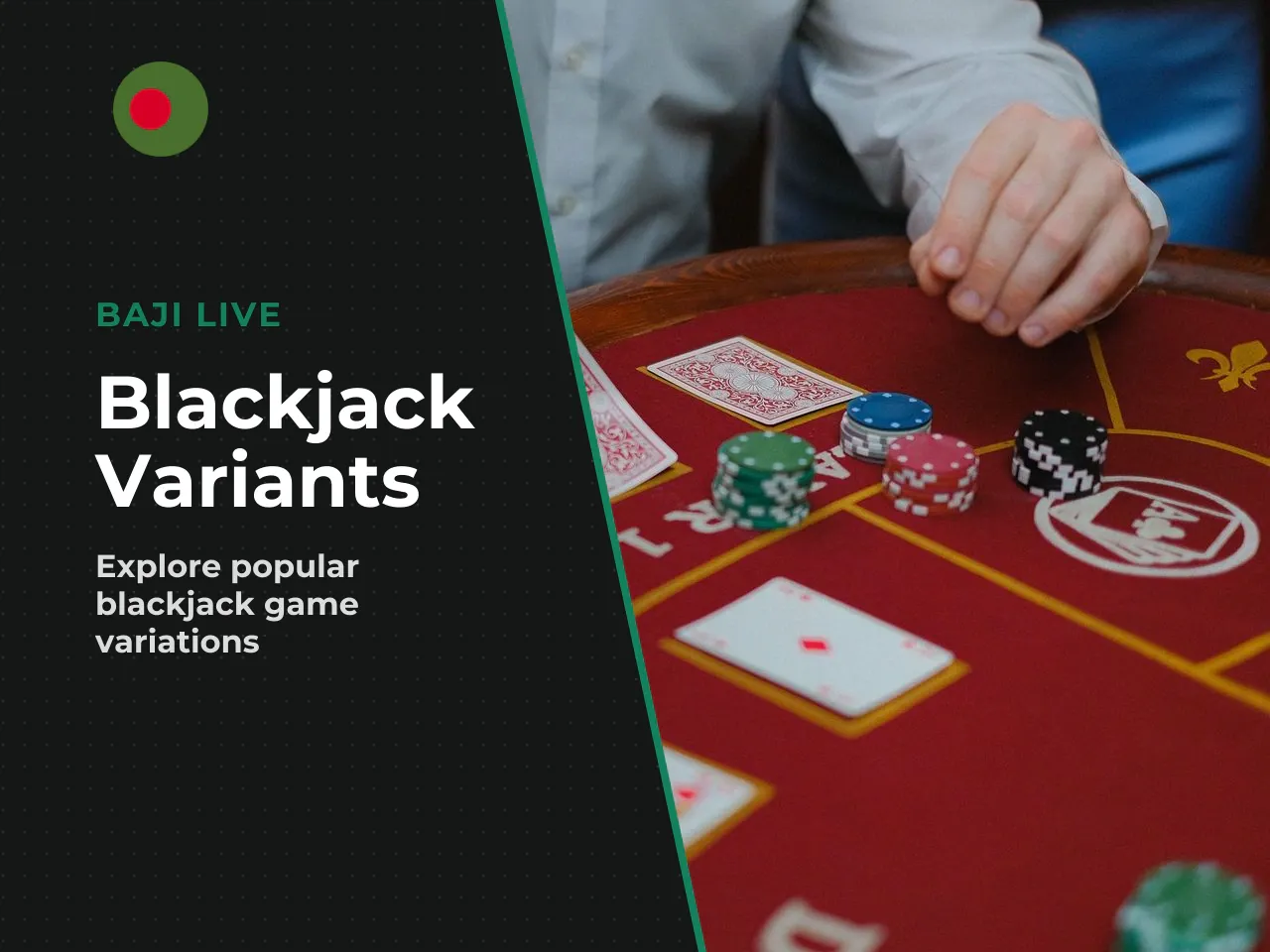
Each variant shifts the house edge, so always verify the specific rules and payout table before placing your first bet. Even a seemingly small rule change, like 6:5 payouts instead of 3:2, can add over a full percentage point to the casino's advantage.
How to choose a blackjack casino or live casino table
A responsible approach requires evaluating the operator's legal status and the technical parameters of a specific table before depositing funds. Choosing a licensed blackjack casino protects you from hidden commissions and interference with RNG mathematics. The difference between a trustworthy platform and a questionable one often comes down to details that are easy to verify if you know where to look.
What to check before you play blackjack online
Before investing real money, verify the following:
- Blackjack payout ratio: The standard is 3:2. Tables offering 6:5 pay significantly less for a natural blackjack and increase the house edge by roughly 1.4 %. Avoid them.
- Soft 17 rule: Prefer S17 (dealer stands on soft 17) over H17 (dealer hits soft 17).
- Licensing and RNG audit: Confirm the operator holds a valid licence and that an independent auditor has certified the random-number generator.
- Surrender availability: If the table offers late surrender, you gain an extra tool for minimising losses in specific scenarios (hard 16 vs dealer 9/10/A).
- Bet limits: Table limits typically range from $1 to $5 000+. Choose a table whose minimum and maximum suit your bankroll and session plan.
- Mobile and demo support: Ensure the table is available on your device and that a demo mode exists for practice.
- Number of decks: Fewer decks generally means a slightly lower house edge, but many online single-deck games compensate with 6:5 payouts or H17. Read the full rule card before assuming fewer decks equals better odds.
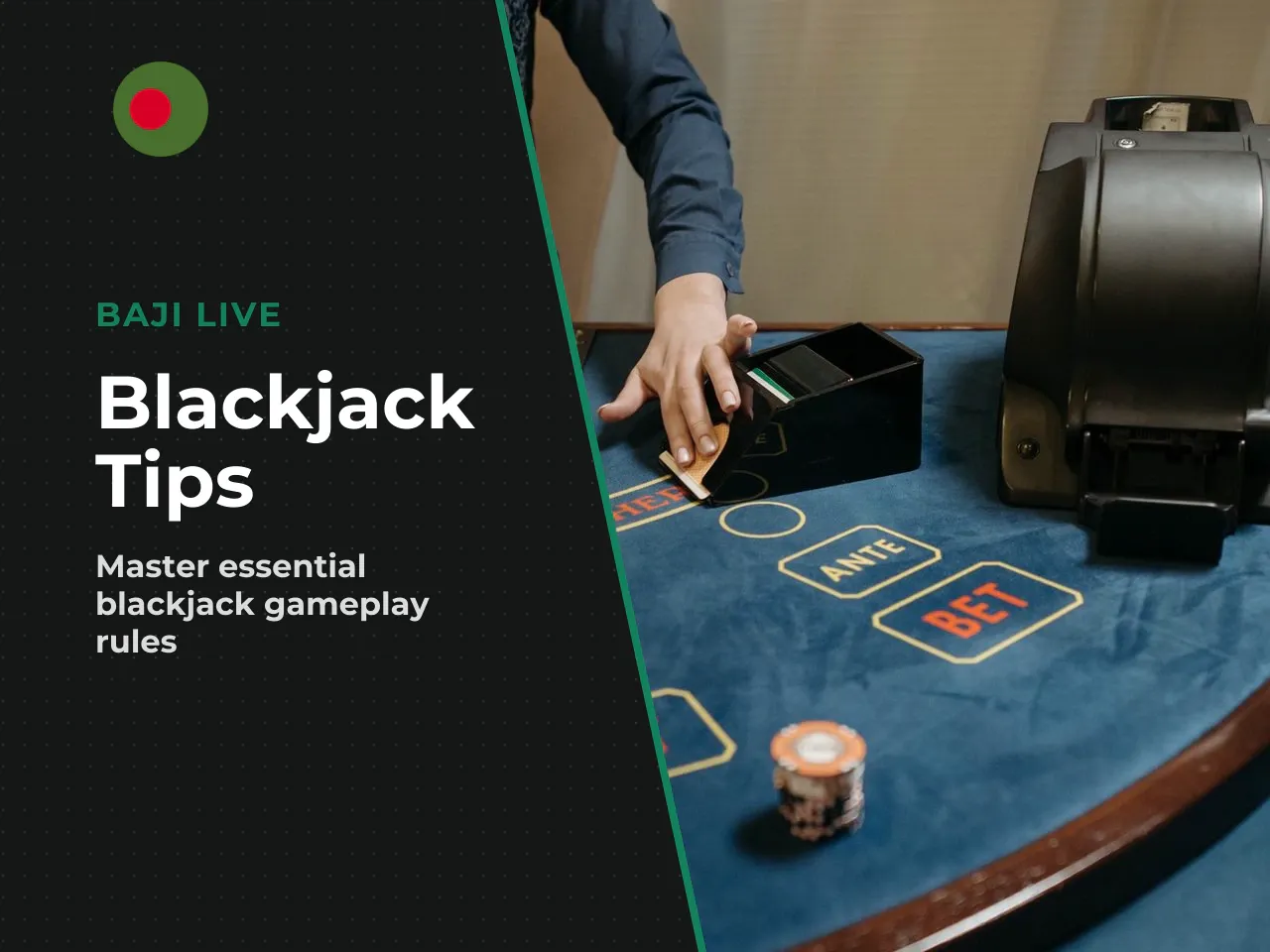
When live dealer blackjack is the better fit
Live tables suit players who are comfortable with a faster pace and want the transparency of a physical dealing process: you can see the deck, the shoe, and every card as it is drawn. However, this format is not recommended for beginners without experience, because time-management is constrained by strict bet timers. If you still need to glance at the strategy chart for every hand, stick with RNG tables until the decisions feel automatic.
[✅ CHECKLIST: What to verify before your first hand]
- Is the blackjack payout 3:2 or 6:5?
- Does the table follow S17 or H17?
- Is there a valid licence and an RNG audit report?
- Are deposit/loss/session limits available in your account settings?
- Is a demo mode available for the same game version?
- Whose software powers the live casino (Evolution, Pragmatic Play, etc.)?
- Do the table's min/max bet limits fit your bankroll?
Glossary of key blackjack terms
| Term | Definition |
|---|---|
| Bust | Going over 21. An automatic loss regardless of the dealer's hand. |
| Push | A tie: player and dealer finish with the same total; the bet is returned. |
| Shoe | A device (physical or virtual) holding multiple decks from which cards are dealt. |
| Bankroll | The total amount of money a player sets aside for gambling. |
| Soft hand | A hand containing an Ace counted as 11 (e.g., Ace + 6 = soft 17). |
| Hard hand | A hand with no Ace, or where the Ace must count as 1 to avoid busting. |
| Double Down | Doubling the bet in exchange for receiving exactly one more card. |
| Surrender | Forfeiting half the bet to end the hand immediately. |
| RTP | Return To Player, the percentage of total wagers returned to players over time. |
| House Edge | The casino's built-in mathematical advantage, expressed as a percentage. |
Online blackjack and Bangladesh: legal context and practical risks
Online gambling operates in a legal grey area in Bangladesh. The Public Gambling Act of 1867, still the primary statute, was written for physical gambling houses and does not explicitly address internet-based casino play. There is no domestic licensing framework for online casinos, which means:
- No locally licensed operators exist.Players access offshore platforms that hold licences from jurisdictions such as Curacao, Malta (MGA), or the UK (UKGC).
- Payment method risks:Popular mobile-financial-service wallets (bKash, Nagad, Rocket) are not designed for gambling transactions, and using them for deposits may lead to account restrictions. International e-wallets or cryptocurrency channels are commonly used as alternatives, but each carries its own risk profile.
- VPN usage:Many players use VPNs to access offshore casino sites. Be aware that VPN-based sessions may complicate identity verification and withdrawal processing.
- Responsible-play priority:Because there is no local regulator to enforce player-protection rules, the burden falls entirely on you. Set personal deposit limits, use only money you can afford to lose, and choose operators with recognised international licences and third-party RNG audits.
One more thing worth mentioning: the absence of local regulation also means there is no formal dispute resolution mechanism if something goes wrong with an offshore operator. That alone is reason enough to be extremely selective about where you play.
This section is provided for educational awareness only. We do not encourage any activity that violates the laws of Bangladesh or any other jurisdiction. Always verify the current legal status of online gambling in your country before participating.
FAQ about blackjack online
Is blackjack a game of skill or luck?
Blackjack combines short-term luck with a long-term skill component. Because the sequence of cards is stochastic, the outcome of any single deal depends on chance. However, the player's choice of action (strategy) determines the mathematical expectation: consistent application of basic strategy demonstrably improves the win-rate over the long run compared with random decisions.
Are live blackjack dealers real?
Yes, the dealers are real people. Broadcasts are conducted from specialised studios whose operations are strictly regulated by licensing authorities. Each dealt card is read by sensors (OCR) and transmitted to the user's digital interface within fractions of a second, ensuring maximum security without pre-generated graphics. If you watch closely during a live dealer session, you will notice the physical shoe, the felt table, and the dealer's hands. It is not a simulation.
Can you learn blackjack in demo before playing for real money?
Absolutely, and this is the recommended path. You can play blackjack in demo mode and test any scenario until you feel fully confident using the strategy chart. Demo versions completely replicate the mathematical model of the paid (real money) RNG games without putting pressure on your financial budget. Think of it as a training ground where mistakes cost nothing but teach everything.
What RTP can I expect in online blackjack?
With perfect basic-strategy play, the theoretical RTP of standard online blackjack is approximately 99.5 % (house edge roughly 0.5 %). In practice, the figure varies by table rules: 3:2 vs 6:5 payouts, S17 vs H17, number of decks, and whether surrender is available all shift the edge. Always check the specific table's rule card before you sit down.
Does card counting work online?
In RNG-based online blackjack, the virtual deck is reshuffled before every deal, making card counting mathematically useless. In live-dealer games, 8-deck shoes with approximately 50 % penetration severely limit any counting advantage. Basic strategy remains the only reliable method for reducing the house edge in online play. If someone tells you otherwise, they are probably trying to sell you a course.
What is the best blackjack variant for beginners?
Classic blackjack on RNG tables is the safest starting point. The pace is fully player-controlled, there are no bet timers, and most platforms offer a free demo mode. Once you are comfortable with the strategy chart and your decisions feel natural rather than forced, you can explore live tables and rule variations like Surrender or Switch.